

Speaker
Created is only the beginning.
Kate Dillon helps organisations, teams and individuals get greater return from the valuable work they already create.

Some of the best work in your organisation is probably producing less than it could.
The work itself may be excellent.
A decision gets made and turns up three meetings later needing to be made again. An expert has something genuinely useful to offer, but other people cannot quite pick it up and run with it. Everyone leaves the same meeting agreeing, only to discover later that they were not agreeing about quite the same thing.
A successful project finishes. Much of what it made possible finishes with it.
And now we can create more, faster.
Creating more does not automatically mean getting more from what we create.
Our ability to create is outgrowing our ability to convert.
Kate Dillon's keynotes are about what happens next.
Kate has keynoted and delivered programs for:

Three different places to find more return.
-
The Opportunity Landscape
Positioned for what’s next
__________________________________As work changes, the role you are in tells only part of the story about the value you can create next.
Experience builds capability, judgement and perspective that can become so familiar we stop seeing its full range or where else it could be useful.
The Opportunity Landscape gives audiences a strategic way to see what they already bring, where it could create useful difference, and which rooms, conversations and opportunities that value needs to reach.
Audiences leave with a clearer view of what they already have to work with, where it could matter next and how to position it for what comes next.
Future of Work · Strategy · Leadership · Positioning
-
The Traction Zone
What happens after everyone agrees?
__________________________________Good work can be approved, agreed and still not change what happens next.
The recommendation was accepted. The decision was made. Everyone left aligned.
Then somebody else has to understand it, use it, explain it or act on it.
The Traction Zone looks at what happens when good work leaves the people who created it and has to work in somebody else’s hands.
Audiences leave knowing how to make valuable work easier to understand, pick up and act on without so much chasing, clarifying and starting again.
Strategy · Execution · Performance · Future of Work
-
The Ghost Pipeline
What has this already made possible?
__________________________________Successful work often creates more than the result you were aiming for.
A project proves capability, solving one problem exposes the next or something built for one purpose turns out to be useful somewhere else.
The Ghost Pipeline looks at what successful work leaves behind: capability, evidence, relationships and opportunities that are now within reach.
Audiences leave knowing how to spot what their existing work has already made possible and where the next opportunity may already be sitting.
Growth · Innovation · Strategy · Opportunity
“Kate was more than just a keynote speaker. She provided powerful tools to enable our employees to adopt a panoramic view.”
Netwealth - Jessica Toth

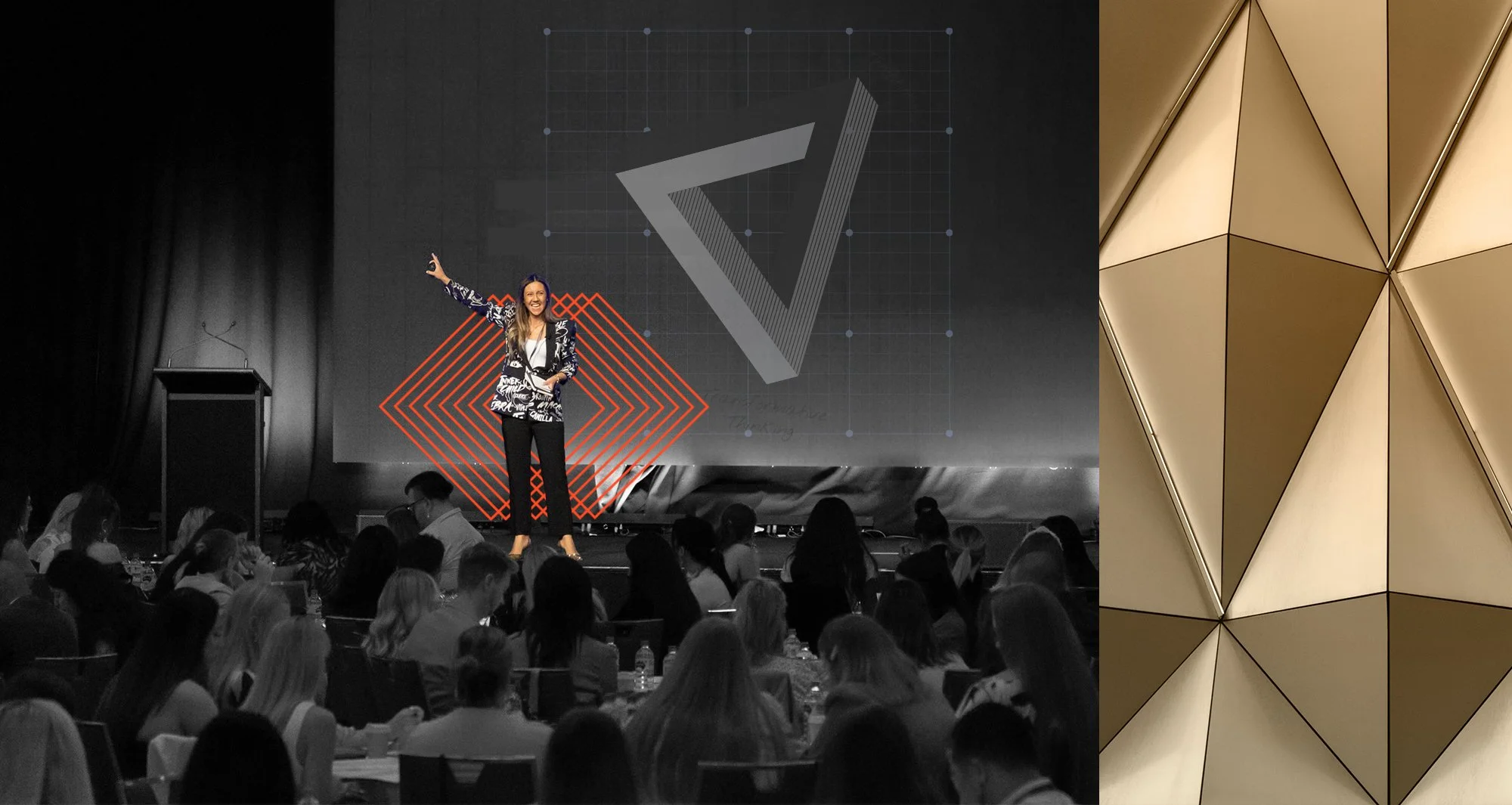
You had to be in the room.
The thinking matters. So does what happens in the room.
A room might be testing an assumption they did not know they were making, discovering that the person beside them heard something entirely different, or meeting Bruce, a 40 kilogram Golden Retriever with his own views about communication and opportunity creation.
People laugh, they participate and occasionally they become the evidence.
Then the idea has somewhere to stick.
“Kate brought such an infectious energy; her insights challenged us all to think differently.”
BEGA - People and capability advisor
-
![Kate Dillon client Commonwealth Bank logo on a light grey background.]()
"The session was not only insightful but deeply impactful."
Laura Henley
-
![Kate Dillon client logo on a light grey background.]()
"Phenomenal. Your energy, insights, and practical tools left a lasting impression."
Ludmila (Mila) Holland
-
![Kate Dillon client logo 'netwealth' on a light gray background.]()
"More than just a keynote speaker, she provided powerful tools such as the CLEVER model."
Jessica Toth
-
![Kate Dillon client logo 'MEAT BUSINESS WOMEN']()
"The sessions were high energy and engaging! Walked away with fresh ideas and actionable tools."
Alexandra L Harvey
-
![Kate Dillon client logo "Property Council of Australia" with stylized building and wave design.]()
"Brilliant presentation and offered such a different take!"
Adrian Byrt
-
![Kate Dillon client logo "Sister Works" with stylized star graphic on a light gray background]()
"Kate has a gift for making complex ideas feel actionable and empowering."
Danielle Mannens
-
![Kate Dillon client logo JBS surrounded by parentheses and motion lines]()
"Kates session was packed with practical tools and strategies."
Michelle Gurdezi





Kate has had a slightly unusual view of what happens next.
Much of Kate’s career has been spent inside large organisations, where work is tested through scrutiny, authority and consequences that matter.
Alongside it, she built a consumer business from scratch where value had to earn attention, be chosen and survive contact with the market.
The environments were wildly different, but Kate kept seeing the same thing.
Everything makes sense where it is created; then it has to move.
That question, what becomes of something useful after it is created, now runs through Kate's work across leadership, organisational performance and intrapreneurship.
On stage, she brings serious thinking together with human stories, audience participation and the occasional contribution from a 40 kilogram Golden Retriever.
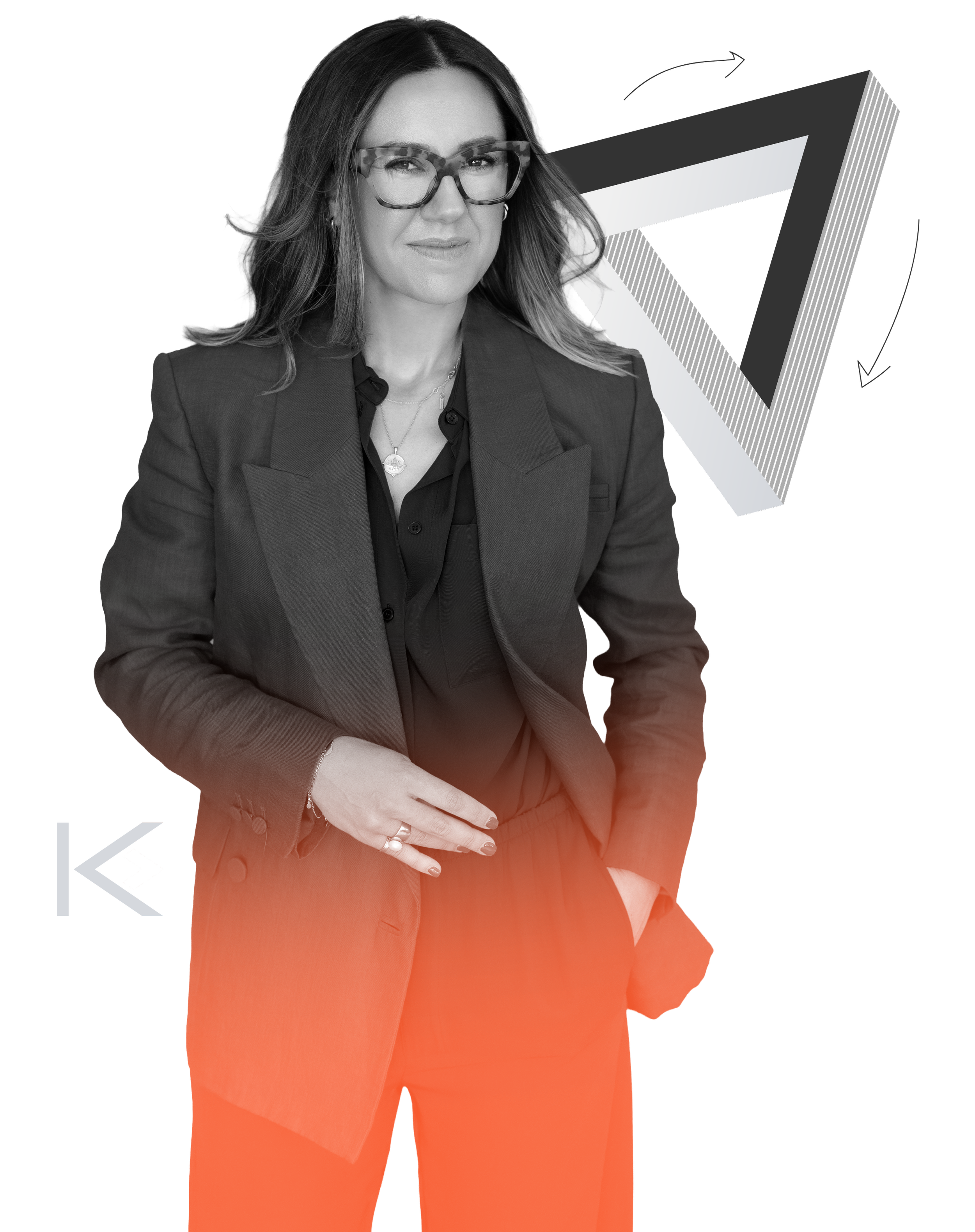
Kate Dillon CSP
Keynote Speaker · Strategic Advisor · Creator of Opportunity Architecture™
Dual qualified lawyer, Australia and New York, USA · BA · LLB (Hons) · MLM (Commercial Law) · GAICD · Stanford · Harvard · MIT · Certified Speaking Professional
The room can be the beginning
A keynote can create a shared idea in 45 minutes.
What happens next depends on what the room needs to do.
Keynote
A high energy standalone experience built around your audience and event.
Masterclass
More room to apply the thinking to real work, decisions and situations already occupying the audience.
Capability
Take the thinking into the work, helping teams use it in what they do next.
Advisory
Bring Kate into consequential work that needs to be worked through, not simply talked about.